
Guidance and recovery
Controls
Flight computers, active aerodynamic control and recovery hardware developed to command the vehicle from launch through landing.
Modular flight computer
Ogma
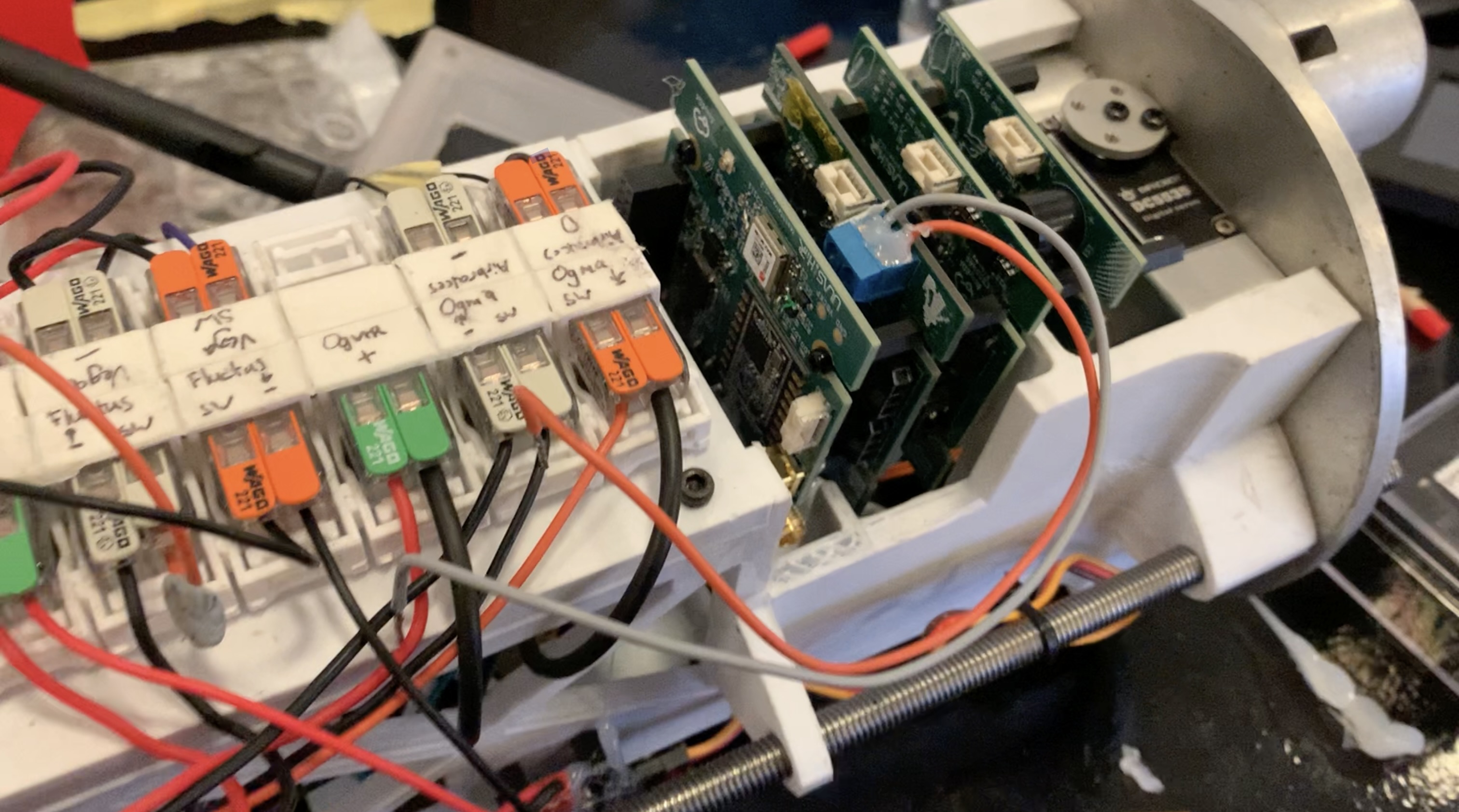
Ogma is HiPR's modular flight computer: five purpose-built boards connected over CAN and packaged as a single avionics stack for a student rocket targeting roughly 9 km altitude.
Croí handles flight state, sensing and logging. Teachtaire provides LoRa telemetry and GNSS, Foinse manages power, Lámh controls the airbrakes and Pléasc commands recovery deployment.
- Architecture
- 5 × four-layer PCBs
- Network
- CAN bus
- Telemetry
- LoRa + GNSS
- Flight target
- ≈9 km apogee
Five boards · one flight network
Active altitude control
Airbrakes
Badhbh's active airbrake system adds controllable drag during ascent. A compact servo-driven mechanism deploys low-profile blades from the composite airframe, then retracts them into the vehicle.
CFD was used to generate the drag polar and verify that an accidental deployment would not destabilise the rocket. The reduced model gives Ogma's PID controller efficient force estimates in real time.
- Vehicle
- Badhbh
- Competition
- Mach-26
- Actuation
- Servo-driven mechanism
- Control
- Real-time PID
- Aerodynamics
- CFD-derived drag model
Pneumatic recovery
CO2
deployment
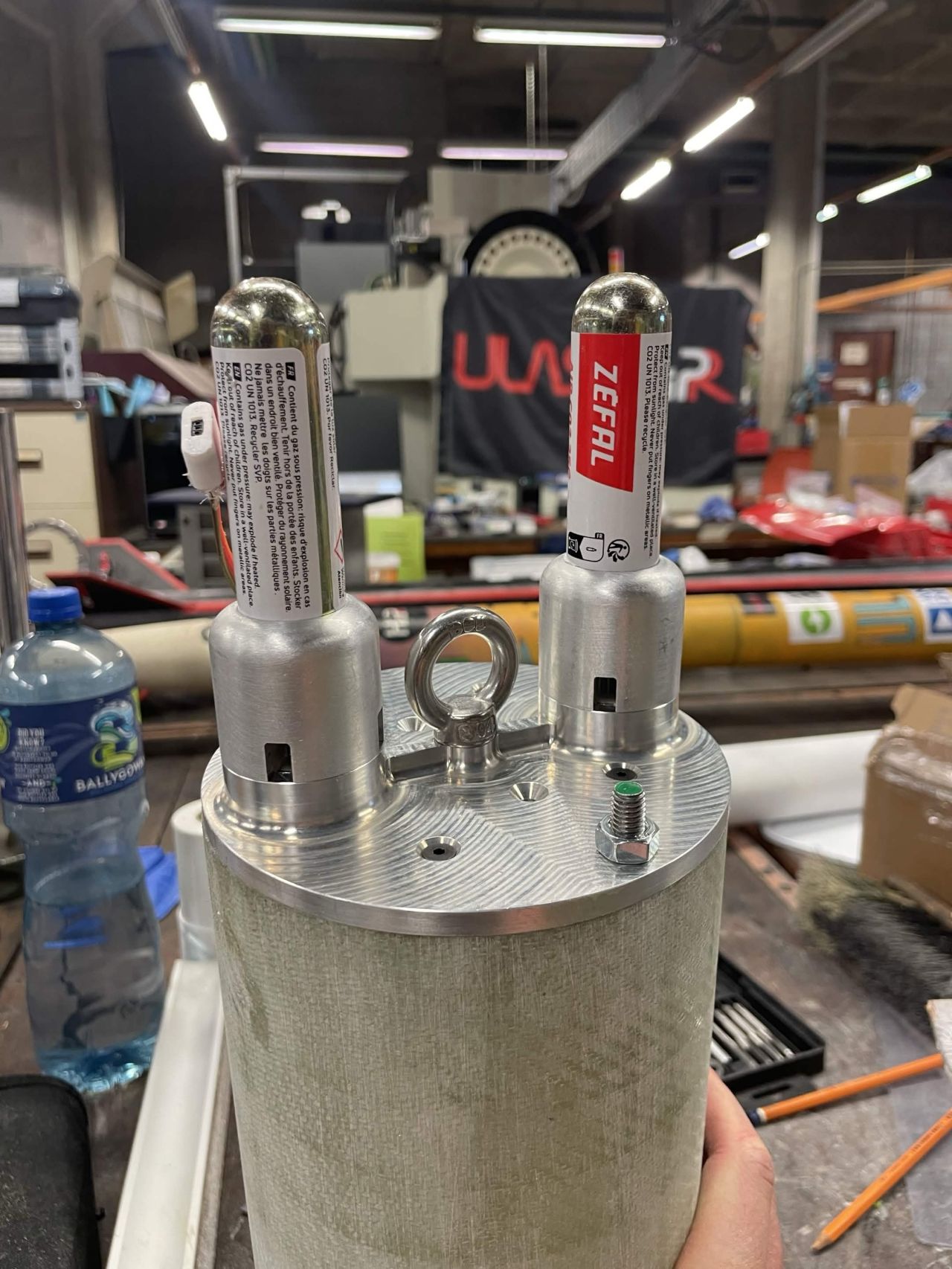
HiPR's custom recovery system packages twin CO₂ cartridges and their controlled release hardware into a compact structural bulkhead. On command, the gas pressurises the recovery bay and deploys the parachute.
The assembly brings the cartridge holders, harness attachment, actuation and airframe interface into one serviceable flight module designed specifically for Badhbh.
- Vehicle
- Badhbh
- Medium
- Compressed CO₂
- Cartridges
- Twin
- Integration
- Custom recovery bulkhead
Twin-cartridge deployment assembly
Build the next control system
HiPR controls combine embedded systems, electronics, simulation, aerodynamics, mechanisms and flight testing.