
Structure
Composite airframe
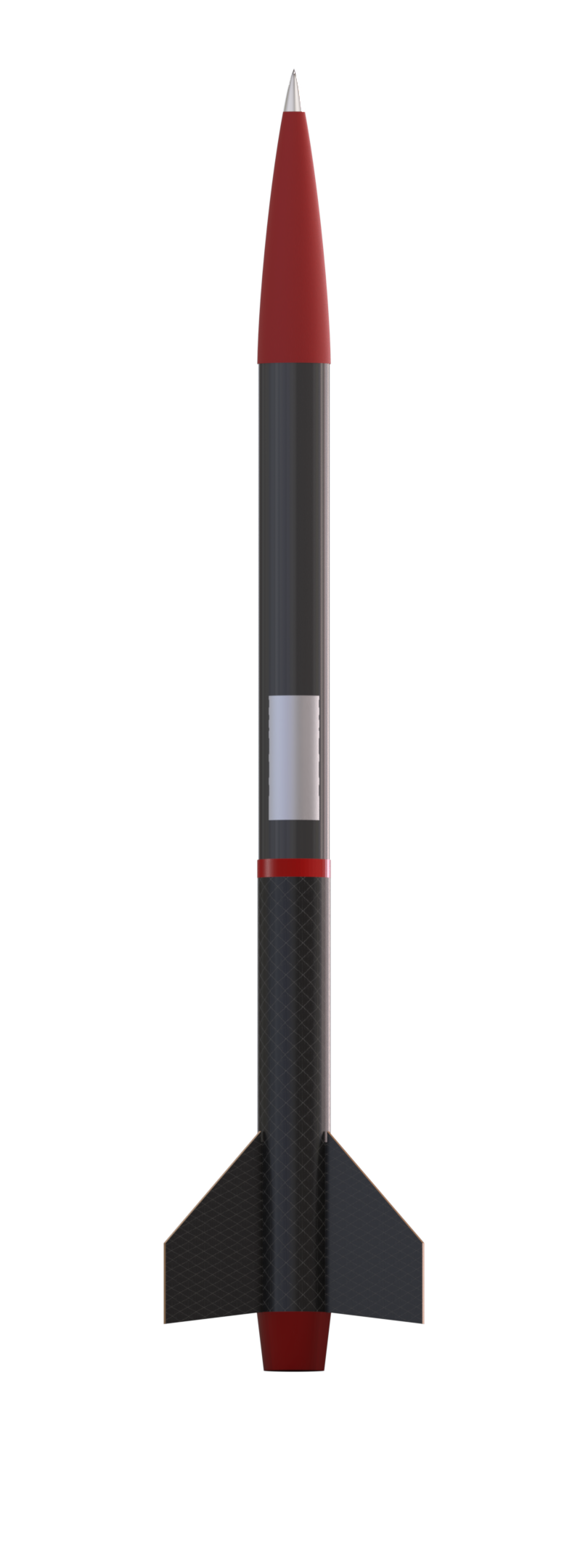
A 2.5-metre Category 3 vehicle built around a fully composite airframe, carrying HiPR's most tightly integrated flight architecture to date.
2.5 m vehicle

Flight programme
The vehicles that represent HiPR at international competitions.

Badhbh · 2.50 m
Mach-26 · 2026 · Vehicle 04
Scroll to see more
Category 3 · 2.5 m
Structure
A 2.5-metre Category 3 vehicle built around a fully composite airframe, carrying HiPR's most tightly integrated flight architecture to date.
2.5 m vehicle
Flight control
A custom six-board flight computer links sensing, logging, communications and actuator control across the vehicle.
6-board stack
Altitude control
Servo-driven airbrakes add controllable drag during ascent. CFD-derived force models feed the onboard controller in real time.
Closed-loop control
Recovery
A twin-cartridge pneumatic system pressurises the recovery bay on command and deploys the parachute through custom flight hardware.
Twin cartridges
Payload bay
The payload stack combined a deployable walking robot with a standalone cosmic-ray detector and its own flight logger.
Two experimental payloads

Macha · 1.96 m
Macha combined a fibreglass upper section with a carbon-fibre lower airframe. It reached 2.273 km at Mach-25, finished second in its category and successfully deployed a CanSat that mapped safe and unsafe landing zones during descent.

Airmedh · 1.95 m
Airmedh was built around a Bluetube airframe for the 3 km category at EuRoC 2024. The team launched it in Ponte de Sor, Portugal, reaching an apogee of 2.275 km and completing HiPR's first EuRoC campaign.
Morrigu · 1.84 m
Morrigu was HiPR's first competition rocket, built from fibreglass and carbon fibre with spring recovery and a deployable payload. The airframe broke up shortly after launch, reaching roughly 600 m and giving the new team its first full set of competition-flight lessons.
HiPR projects are built by students across engineering, electronics, software, operations and communications.